
Slowing Down Is Leadership, Not Failure


The Truth We Don’t Want to Admit
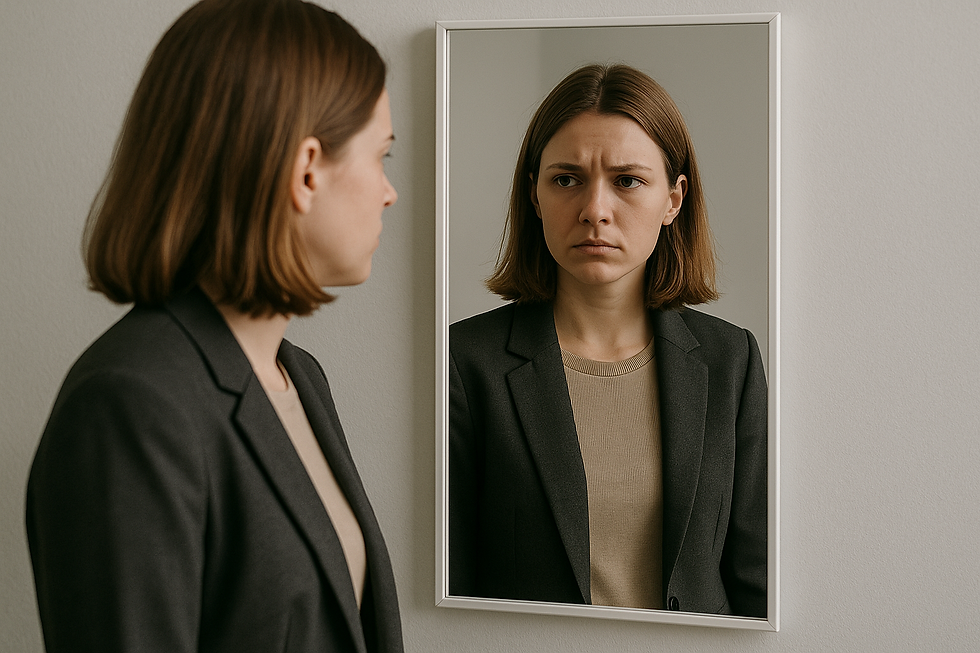
A brilliant professional I once coached told me, “I don’t recognise myself anymore.
I used to thrive under pressure, but now I’m just tired.”
She hadn’t lost her edge.
She’d lost her rhythm.
She was still showing up, still performing but something inside her had quietly shut down.
Her drive hadn’t disappeared; it had been running on survival mode for too long.
In today’s world, we often confuse constant motion with progress.
If we’re not producing, responding, or achieving, it feels like we’re falling behind.
But slowing down isn’t failure; it’s leadership.
It’s the ability to pause long enough to see clearly again.
The Cost of Constant Acceleration
Research from the University of California found that professionals check their messages or emails every six minutes on average.
That’s not productivity; that’s fragmentation.
Dr. Gabor Maté calls this “the disease of being busy.”
He explains that many brilliant professionals develop a compulsive drive to do; not out of passion, but protection.
When our worth is tied to our output, slowing down feels unsafe.
From a nervous-system lens, this makes perfect sense.
If your body has been in “go” mode for years, stillness can trigger anxiety.
The system equates calm with danger because it’s forgotten what rest feels like.
That’s why many professionals say, “I don’t know how to stop.”
It’s not a mindset issue; it’s a physiological one.
And it shows up subtly:
You make quick decisions but second-guess them later.
You keep moving but can’t feel real satisfaction.
You achieve goals but don’t feel fulfilled.
Slowing down isn’t a loss of ambition.
It’s a return to alignment.
Reclaiming a Pace That Serves You
Tara Mohr reminds us that you can’t hear your inner mentor when the noise of the world is too loud.
And neuroscience agrees: when we pause, the brain’s prefrontal cortex, responsible for clarity, empathy, and long-term thinking, switches back on.
The body exits survival mode and re-enters connection mode.
Here are three small, practical ways to practise slowing down as leadership:
Pause before you respond.
The breath between stimulus and response is where wisdom lives.
Before replying to an email or saying yes to a request, take one full exhale.
That’s not hesitation; that’s discernment.
Name the rush.
When you feel the urgency rise, ask yourself: “What am I afraid will happen if I don’t move faster?”
Often, it’s not the task that drives you; it’s the fear beneath it.
Naming it is the first act of regulation.
Let your body lead.
Drop your attention into your senses.
Notice your breath, shoulders, jaw.
This isn’t mindfulness for performance; it’s re-teaching your system that calm is safe.
When your body feels safe, your mind can choose wisely.
Real leadership isn’t about acceleration; it’s about attunement.
The best professionals know when to move and when to make space.
That rhythm is what sustains clarity, presence, and impact.
Your Next Step
Slowing down isn’t doing less.
It’s doing what matters: from a place that’s clear, not chaotic.
If you’ve been feeling off-track or exhausted, this may be your cue to pause.
Not to stop your growth but to reconnect with the pace that actually fits you.
Take two minutes to complete the Reignite Your Spark Assessment.
It’ll help you see where to start restoring genuine momentum.
👉 Take the Reignite Your Spark Assessment now.
Because slowing down isn’t weakness.
It’s wisdom in motion.


Comments